

For centuries, chickens have lived alongside people in settlements of every scale, from rural farms and village compounds to dense urban neighborhoods. Across much of the world, keeping a flock has been part of everyday life, providing eggs and meat to residents, or pest control for the surrounding agricultural land. The structures built to house chickens varied according to local materials, climate, and cultural practices, yet they shared a common purpose: to create a space where chickens and humans could coexist. The chicken coop is not a new architectural typology nor a contemporary response to urban living. Instead, it is a form that has continually adapted to changing social, environmental, and spatial conditions.

Despite wide variation in appearance, coop design remains grounded in the biological needs and behavioral patterns of the birds themselves. Domestic chickens descend from species of fowl, forest-dwelling birds that naturally seek elevated places to rest at night. Roosting above the ground reduces vulnerability and provides security, a behavior that remains evident in domestic flocks even today. This instinct explains many recurring features found in coops across cultures and contexts, including raised perches, enclosed sleeping areas, protected nesting spaces, and controlled points of entry.
As patterns of living, working, and food production continue to evolve, chickens are increasingly housed within settings shaped by new social expectations, regulatory frameworks, environmental concerns, and spatial constraints. A coop built for a rural farm responds primarily to climate, predators, and agricultural routines. A coop built for a suburban backyard, an urban garden, a hospitality destination, or a community landscape needs to negotiate issues of education, sustainability, tourism, neighborhood relations, land use, and maintenance. The contemporary chicken coop offers a useful lens through which to examine questions of transspecies architecture. More than a shelter for animals, it reveals how design mediates relationships between humans, animals, culture, and place.
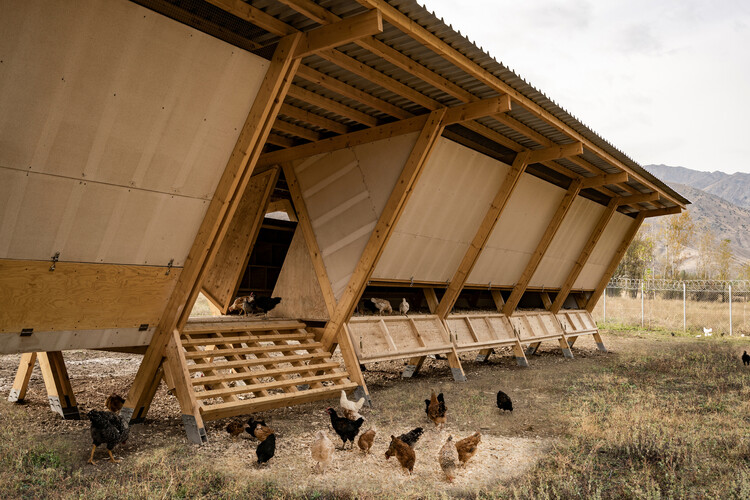
House of Chickens / SO? Architecture and Ideas
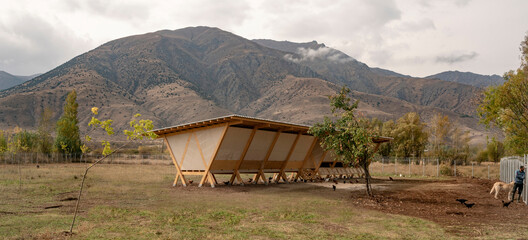
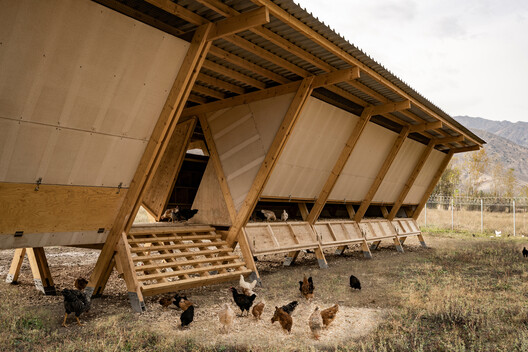
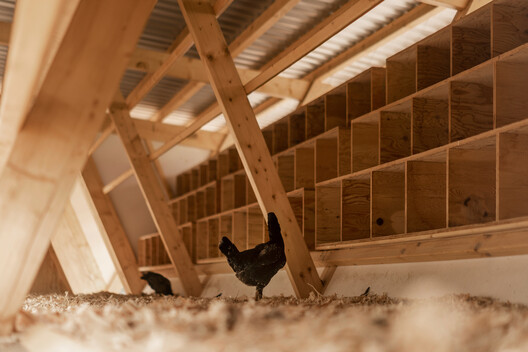
Designed as part of the Palanga Art and Architecture Farm in eastern Turkey, the House of Chickens demonstrates how animal architecture can contribute to the revitalization of rural communities. Commissioned as part of a broader effort to reactivate a landscape affected by depopulation and agricultural decline, the project treats the chicken coop as agricultural infrastructure and cultural intervention. Its timber structure responds to local climate conditions and observed chicken behavior through cross ventilation, shaded outdoor areas, elevated roosting spaces, and accessible nesting areas. Features such as exterior egg collection points accommodate human routines while minimizing disturbance to the birds. Drawing from traditional coop typologies, the project shows how design can strengthen relationships between animals and people while supporting broader efforts to sustain rural life.
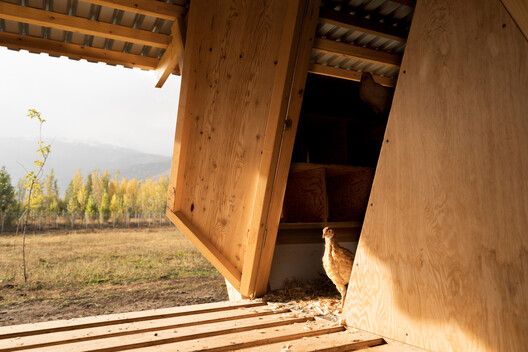
If the users, chickens, do not appropriate "the house", they simply won't live in it. The design process is driven by this natural fact; every design principle is based on the observation of the chickens, and the previous experiences of local people.
Kenmore Pavilion / CARD
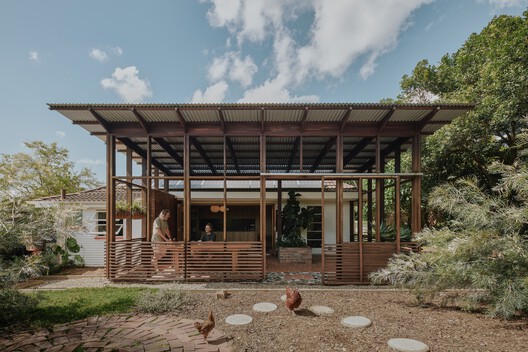
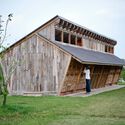
At Kenmore Pavilion in Brisbane, the chicken coop forms part of a broader rethinking of suburban domestic life. Developed alongside the renovation of a mid-century house, the project uses adaptive reuse and reclaimed materials to reconnect everyday routines with the garden. Constructed from salvaged cedar and reused framing timber, the coop extends the project's wider commitment to sustainability while integrating animal keeping into spaces for cooking, gardening, and outdoor gathering. This is less a piece of agricultural infrastructure than an expression of changing attitudes toward food production, environmental responsibility, and life at home. Its presence reflects a growing interest in bringing activities once associated with rural landscapes into contemporary suburban settings.
Næra Hotel, Chicken Coop / Leeko Studio
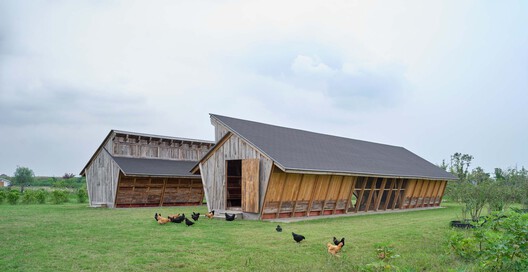
Designed for the Næra Hotel in rural China, this chicken coop reimagines animal housing as necessary agricultural and educational spaces. The project emerged from a growing disconnection between urban populations and food production, particularly among children in the community who have limited exposure to farming practices. Rather than concealing the processes of animal husbandry, the coop was designed to make them visible and accessible. Guests can observe chickens, collect eggs, and learn about their daily routines, transforming the structure into an interface between agricultural life and contemporary tourism.
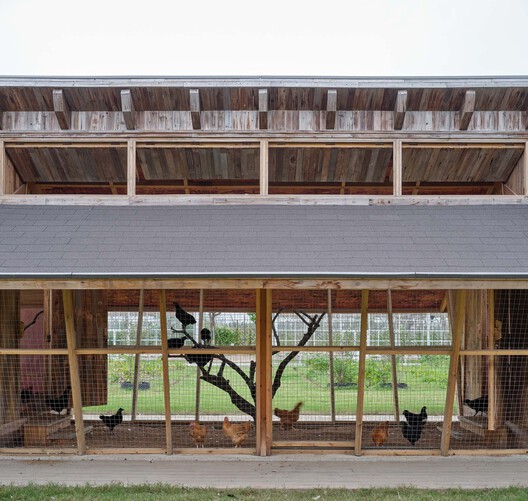
Located in the east of a thousand-year-old town called Xitang, Næra Hotel is not only deeply rooted in the history and culture of southern China, but also adjacent to the vast fertile land around Xiangfu Marshes. It is a new cultural and ecological hotel far beyond the definition of a normal hotel that provides accommodations and meals.
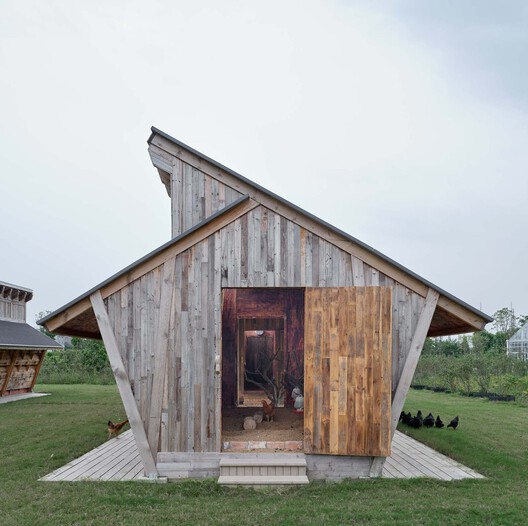
The design is shaped by a careful balance between chicken welfare, human experience, and rural construction realities. Observations of chicken behavior informed features such as elevated roosting areas, naturally ventilated social spaces, protected nesting zones, and abundant daylight. At the same time, the layout accommodates hotel staff through accessible cleaning routes and exterior egg collection points, while allowing visitors to engage with the animals without disrupting them. Constructed from modular timber components and inexpensive materials familiar to local builders, the project also responds to its rural setting by prioritizing ease of construction, maintenance, and future replication. Here, the chicken coop functions as a space that reconnects urban visitors with agricultural systems while supporting the practical routines of humans and chickens.
Chicken House / Tropical Space
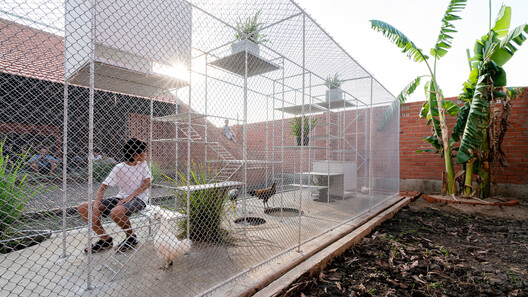
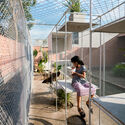
Designed for an elderly couple relocating to the Vietnamese countryside, Chicken House reflects changing ideas about retirement, family life, and daily engagement with nature. Rather than isolating chickens in a conventional enclosure, the project creates a shared environment where animal care becomes part of everyday domestic routines. Elevated roosting areas, shaded spaces, and opportunities for movement support the behavioral needs of the birds, while the open mesh structure maintains visual connections between the coop, the garden, and family activities. Vegetable cultivation and the reuse of chicken waste for irrigation further integrate the chickens into the wider landscape. In this case, the coop serves as a small piece of social and ecological infrastructure, shaped as much by human desires for slower rhythms of life and intergenerational interaction as by the practical requirements of housing animals.
House b·o / driearchitecten
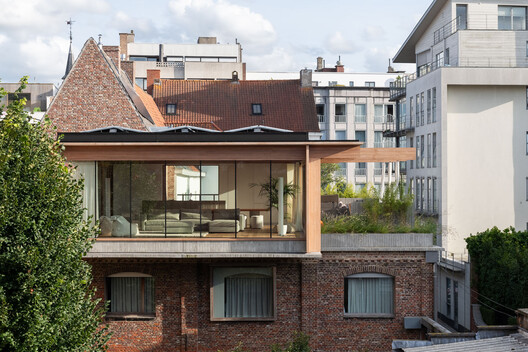
At House b·o in Belgium, chickens are incorporated into a private rooftop garden as part of a larger effort to introduce elements of rural life into a dense city environment. The project combines the renovation and expansion of an existing building with the preservation of green outdoor space, creating a balance between urban living and everyday contact with nature. Within this setting, the presence of chickens contributes to a garden that functions not only as an amenity for residents but also as a reminder of practices traditionally associated with rural life.
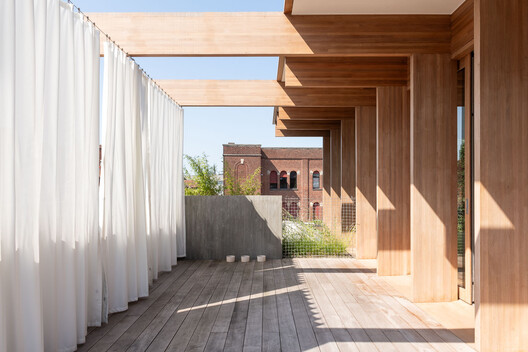
Rather than reshaping the architecture itself, the chickens reflect changing expectations of urban domesticity. As cities become denser, private gardens increasingly serve multiple roles as spaces for recreation, food cultivation, biodiversity, and animal keeping. In this project, the flock becomes one component of a broader attempt to reconnect everyday urban life with natural processes, illustrating how animal husbandry can be integrated into contemporary residential environments without requiring dedicated agricultural infrastructure.
Niwatorigoya Chicken Coop / 2M26
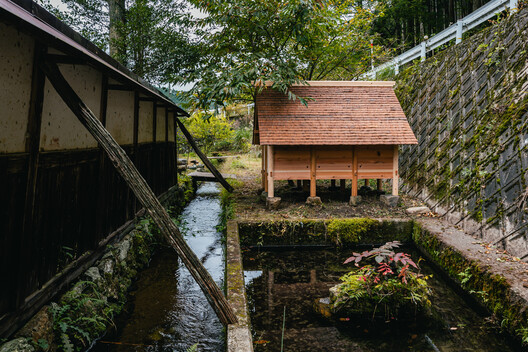
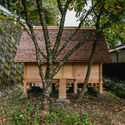
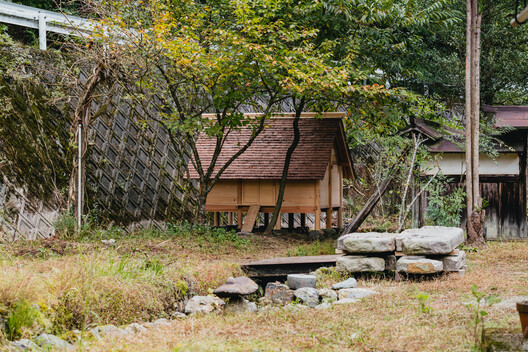
Design and built by Kyoto based architecture studio 2m26, Niwatorigoya is a chicken coop located in Keihoku, north mountain side of Kyoto city. Next to a thatched-roof dwelling, Niwatorigoya reinterprets the Ise shrine structure.
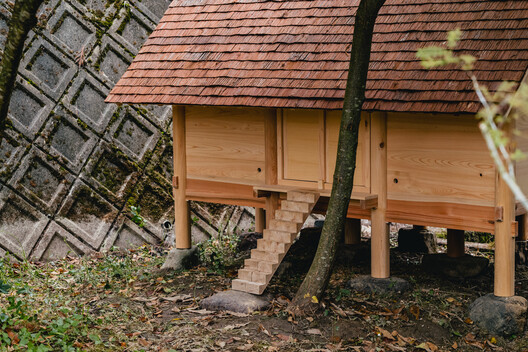
The Niwatorigoya Chicken Coop in Kyoto demonstrates how animal architecture can also become a vehicle for preserving cultural knowledge. Inspired by the structure of Japanese shrines, the coop adapts traditional construction methods and locally sourced materials to meet the needs of free-range chickens. Elevated roosting areas, nesting spaces, predator protection, and accessible egg collection are incorporated within a structure assembled using traditional joinery and designed for eventual disassembly and return to the landscape. Rather than responding to new patterns of living or urban growth, the project reveals how the chicken coop can support continuity, sustaining both nonhuman life and long-standing building traditions.
The Contemporary Chicken Coop
Across these projects, the biological requirements of chickens remain consistent, but human priorities surrounding them are in continuous flux. Rural revitalization, sustainability, food literacy, tourism, heritage preservation, and new forms of domestic life each leave their mark on the same basic typology. The contemporary chicken coop reveals less about the evolution of chickens than it does about the evolution of human society. As patterns of living, working, and food production continue to shift, the coop becomes a record of how those changes are negotiated through design. In accommodating another species, architects are responding to changing cultural values, environmental concerns, and everyday routines. The chicken coop, although modest, offers a clear example of transspecies architecture in practice, demonstrating how design mediates relationships between animals, people, and the worlds they share.
This article is part of the ArchDaily Topic: Transspecies Architecture: The Life of Materials, Ecological Alliances, and Nature's Agency. Every month we explore a topic in-depth through articles, interviews, news, and architecture projects. We invite you to learn more about our ArchDaily Topics. And, as always, at ArchDaily we welcome the contributions of our readers; if you want to submit an article or project, contact us.


